
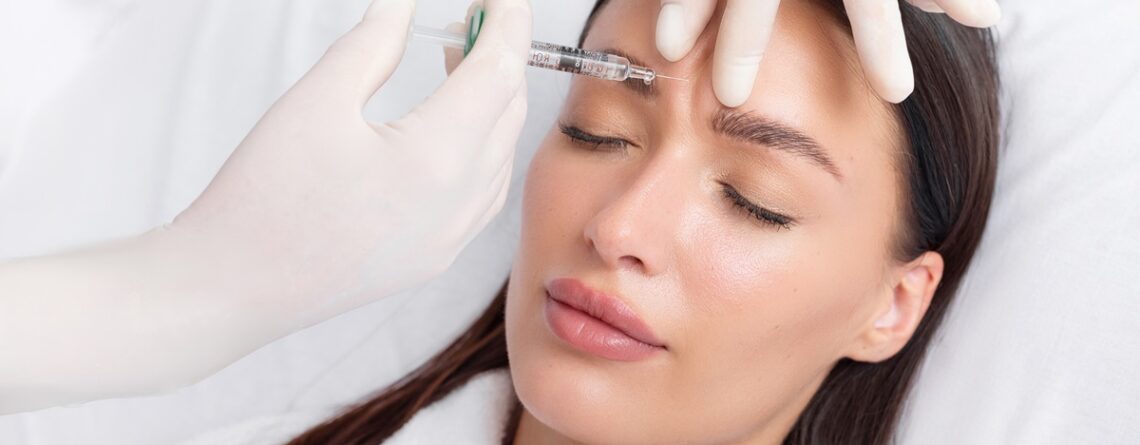
What Is Botox? A Complete Guide for First-Timers
You’ve been thinking about it longer than you’d like to admit. Here’s the honest version of everything you need to know.
Here’s the thing nobody tells you going in: the appointment is shorter than getting a haircut.
No sedation. No recovery room. Most people do it on a lunch break and then go back to work. And yet, for someone considering Botox for the first time, there’s this enormous buildup—weeks of Googling, quietly studying the faces of people you think might have had it, talking yourself in and out of it while trying not to mention it to anyone.
That gap between how routine this actually is and how loaded it feels? That’s what this is about.
If you’re somewhere in Nassau County—Jericho, Syosset, Woodbury, Oyster Bay, it doesn’t matter—and you’ve been in that cycle of half-considering it, this guide is written for you. Not in the clinical, overly cautious way that medical content usually is. In the way a friend who happens to work in aesthetics would talk to you over coffee.
Let’s go through it.
What Is Botox, Actually?
Botox is a purified protein—specifically botulinum toxin type A—that temporarily interrupts the signal between a nerve and a muscle. That sounds more alarming than it is. The quantities used in cosmetic treatment are extraordinarily small, and the mechanism is so well-understood at this point that it’s been FDA-approved not just for wrinkles but for migraines, excessive sweating, jaw clenching, overactive bladder. It’s one of the most studied substances in aesthetic medicine.
In a cosmetic context, what it does is simple: it relaxes specific facial muscles—the ones you use when you frown, squint, raise your eyebrows—and in doing so, softens the lines those muscles create over time.
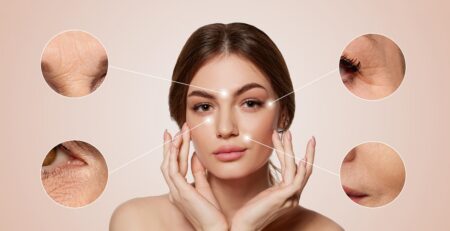
Think about the crease between your brows. Or the horizontal lines that appear on your forehead when you look surprised. Those exist because you’ve been making those expressions for years, decades, and the skin above those muscles has creased along those same grooves every single time. Botox doesn’t erase what’s already there—it stops the muscle from contracting as forcefully, which prevents those lines from deepening and, over time, allows the skin to relax.
A good Botox result doesn’t look like anything. That’s the point. You just look like you—minus whatever it was making you look tired.
The effects aren’t permanent. This is either the first thing people find reassuring or the part they get hung up on, depending on the person. Results typically last three to four months, after which the muscle gradually wakes back up and everything returns to baseline. If you try it and don’t love it, you wait. That’s it.
The Three Places Everyone Asks About First
There are more treatment areas than most people realize, but if you’re walking in for the first time, odds are you’re thinking about one of these:
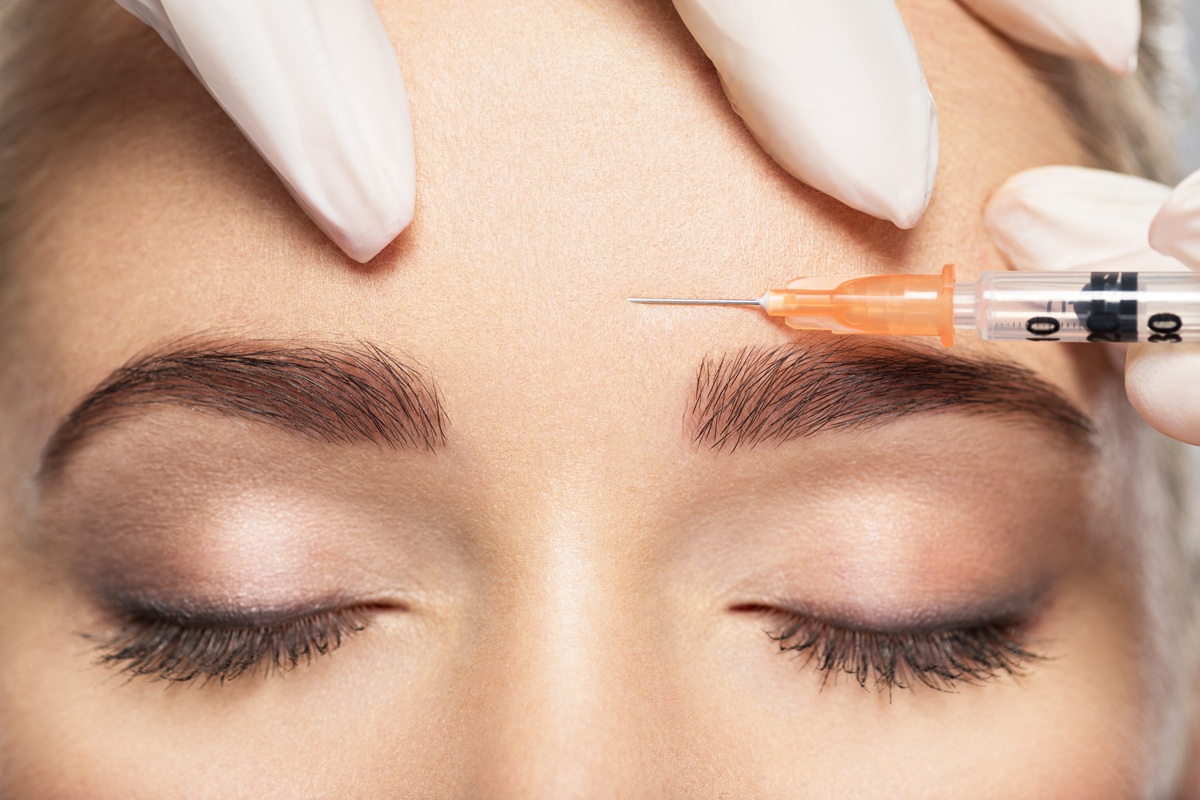
The forehead
The horizontal lines that appear when you raise your eyebrows. This is one of the most requested areas, and also one of the easiest to overdo. A heavy hand here is what creates the frozen, expressionless look that gives Botox a bad reputation. The goal isn’t to eliminate movement—it’s to soften it. A skilled injector knows the difference.
Between the brows—the “11s”
The vertical creases that form when you frown, concentrate, or squint. Deep 11s are what make people look like they’re perpetually irritated even when they’re not. This is the area that most commonly brings people in for the first time, and results here tend to be among the most satisfying. When those lines soften, the overall effect on how someone reads emotionally can be significant.
Crow’s feet
The lines that fan out from the corners of your eyes when you smile. Crow’s feet treatment is delicate—you want to reduce the depth of the lines without flattening the expression. The smile should still reach the eyes. That’s a technical thing, and not every injector executes it at the same level.
Outside of these three, Botox gets used for jaw slimming, a subtle brow lift, lip lines, neck bands, and hyperhidrosis (excessive sweating—which, if you deal with it, you already know Botox for this is something of a revelation). But first appointment? Pick one or two areas. See how you respond. Build from there.
What Actually Happens During the Appointment
A first Botox appointment at a med spa worth going to runs somewhere between 30 and 45 minutes—and probably 20 of those minutes are conversation. Theresa Pinson, the nurse practitioner at Virtual Skin Spa in Jericho, is known for spending more time on the consultation than the actual treatment. She wants to understand what you’re trying to fix, what you’re not trying to fix, what you’ve tried before, and what you’d consider a win.
Then she’ll look at your face. Not in the way that makes you self-conscious—in the clinical way, the way someone assesses facial symmetry and muscle movement and where the real issue actually is versus where you think it is. Those aren’t always the same thing.
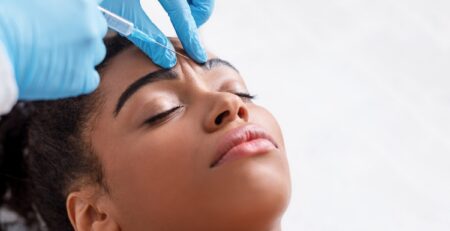
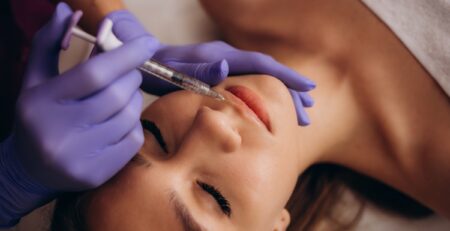
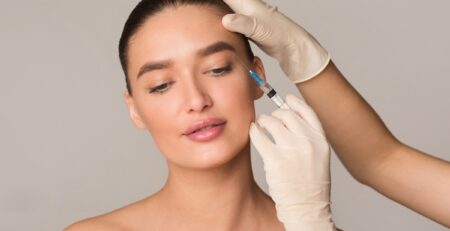
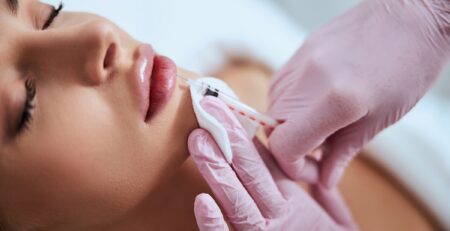
The injections themselves take five to fifteen minutes. The needle used is extremely fine—finer than what you’d get for a blood draw—and the sensation is usually described as a quick pinch. Some spots are more sensitive than others. Crow’s feet tend to be more noticeable than the forehead. Most providers will offer topical numbing or ice if you want it.
Afterward: stay upright for a few hours. Skip the gym tonight. Don’t press or massage the area. You’ll be told all of this.
Results don’t show up immediately. The muscle doesn’t just switch off—it fades over a few days. Most people start noticing something around day three or four, with full results settling in at the two-week mark. First-timers often underestimate how subtle the end result will look. That’s actually the goal.
How Long It Lasts—And Why That Answer Is Complicated
Three to four months is what you’ll hear most often. For first-timers, it’s frequently closer to three. For people who’ve been doing it consistently for a year or two, it sometimes stretches toward five.
The thinking behind that pattern: muscles that get consistently relaxed lose some of their baseline conditioning. They require less product to achieve the same effect, and the effect holds longer. It’s not guaranteed—metabolism, how much you exercise, which area was treated, and how the product was diluted all factor in—but it does seem to hold across a lot of people.
A note on dilution, because it matters: Botox is supplied in a powder form that has to be reconstituted with saline before injection. The ratio of saline to product affects how concentrated—and therefore how effective—each unit is. Discount providers sometimes use aggressive dilution to stretch their supply. This is one of the many reasons that “cheap Botox” is often a false economy.
Price shop for a lot of things. Don’t price shop for this.
Who Shouldn’t Get Botox
Pregnancy and breastfeeding: no. Certain neuromuscular conditions—myasthenia gravis, ALS—are contraindications. Allergies to botulinum toxin products are rare but disqualifying. Any reputable provider will walk through this with you.
Beyond the medical checklist, there are people for whom Botox alone isn’t the right tool. If you have significant volume loss—the kind that makes the face look hollowed rather than lined—Botox won’t fix that, and a provider who tells you otherwise isn’t being straight with you. If the lines you’re concerned about are fully etched in at rest, not just visible when you’re moving your face, the conversation might need to include fillers or other modalities.
This is where a real consultation matters. Someone who listens to what you want, looks at your face, and tells you honestly whether Botox gets you there—or whether something else would serve you better—is doing their job. Someone who just books you is not.
Finding the Right Provider on Long Island
The Long Island market for med spas has expanded considerably in the past few years. There are good options. There are also a lot of places that are aggressively discounted, heavily franchised, and staffed by injectors who are technically licensed but thin on actual experience.
What you’re looking for:
- A licensed medical professional—an NP, PA, or physician—who is actually performing or directly supervising your injections, not just signing off from across the building
- A consultation that feels like they’re trying to understand you, not upsell you
- Before-and-after photos that show real patients, not stock images or heavily filtered content
- A provider who will tell you if you don’t need something yet—or if what you’re asking for won’t achieve what you think it will
- Somewhere you’d feel comfortable calling with a question the next day
Virtual Skin Spa in Jericho has operated on that last principle since opening. Theresa’s patient base includes people who drive from Huntington, from Great Neck, from the Hamptons—because they found a provider they trust and they’re not interested in starting over somewhere else. That’s the relationship worth finding.
The Questions Nobody Wants to Ask Out Loud
“Will people be able to tell?”
If it’s done well, no. Someone might tell you that you look rested, or that something seems different, but they won’t be able to place it. If it’s done poorly—overtreated, or treated by someone who didn’t evaluate your anatomy carefully—then yes, it can be obvious. This is not an argument against Botox. It’s an argument for doing your homework on who does it.
“What if I hate it?”
You wait. The effect fades. Full stop. This is a significant part of why Botox is such a sensible entry point for people who are curious but cautious—there’s an exit ramp built in.
“Is this something I’d have to keep doing?”
Nobody’s going to hold you to anything. Some people do it once, like it, and decide it’s not worth the maintenance. A lot of people do it once, like it, and work it into their routine two or three times a year. It’s not addictive in any medical sense. But you will probably like how you look, and that’s a thing to be aware of going in.
“What age should I start?”
There’s no right answer. Some people in their mid-twenties start preventatively—the idea being that muscles you don’t let crease the skin as aggressively may leave less residual damage over time. Some people wait until their forties or fifties and are excellent candidates. It’s genuinely personal. The better question is what you’re looking at in the mirror and whether it bothers you.
“Does it hurt?”
Less than you’re expecting. The needle is small. The areas most people treat aren’t particularly sensitive. It’s over fast. It’s not nothing, but it’s not a big deal either—and most people are visibly more relaxed about it after the first time than they were before.
One More Thing Before You Book
A consultation isn’t a commitment. It’s a conversation. You’re allowed to go in, hear what a provider thinks, decide it’s not the right time, and leave. A good med spa will not pressure you. If they do, that’s actually useful information.
If you’ve been thinking about this—and something tells us you have been, or you wouldn’t be here—talking to someone who does this every day and can look at your specific face and tell you specifically what they’d do and why is going to answer in twenty minutes what another six months of Googling won’t.
Virtual Skin Spa is at 500 North Broadway, Suite 142A in Jericho. Theresa and her team see patients from across Nassau and Suffolk counties—and beyond.
Schedule a consultation at virtualskinspa.com or call (917) 331-6191.




Leave a Reply
You must be logged in to post a comment.