

Loose Skin After Pregnancy: Non-Surgical Tightening Options
Your skin did something remarkable over nine months. It stretched to make room for a whole person, then had to figure out what to do with itself once that person arrived. For some women it snaps back within a few months. For a lot of others, the belly stays soft, wrinkled, or loose long after the scale says they’re back to normal.
That’s frustrating, especially when you’re doing everything right. It’s also extremely common, and it usually has nothing to do with effort.
This article covers why skin stays loose after pregnancy, how much it improves on its own, how to tell what kind of looseness you have, and which non-surgical treatments can tighten it. We’ll also be honest about when a treatment won’t be enough.
Why skin stays loose after having a baby
Skin gets its firmness from two proteins in the dermis: collagen, which gives it structure, and elastin, which lets it stretch and recoil. Think of elastin as the spring. Pregnancy pulls on that spring for months, and sometimes it doesn’t fully return.
A few things affect how much your skin bounces back:
- Genetics. Some people simply make more resilient collagen. If your mother had loose skin after pregnancy, you may be more likely to as well.
- Age. Collagen production slows every year after your mid twenties, so skin in your late thirties has less to work with than skin at 25.
- How much the skin stretched. Twins, a large baby, extra amniotic fluid, or significant pregnancy weight gain all stretch the skin further.
- Number of pregnancies. Each pregnancy stretches tissue that may not have fully recovered from the last one.
- Sun damage and smoking. Both break down collagen and make recovery slower.
There’s also a part that isn’t skin at all. If your abdominal muscles separated during pregnancy, the stomach can look loose or pooched even when the skin itself is in decent shape. That’s diastasis recti, and it needs a different fix, which we’ll get to.
How long it takes skin to recover on its own

Before you treat anything, give your body time. Skin keeps remodeling for months after delivery. Collagen rebuilds slowly, swelling goes down, and the uterus returns to its normal size over about six weeks.
Most women see the biggest natural improvement over the first six months, with smaller changes continuing up to about a year. Breastfeeding can also affect how the body holds fluid and fat, so things may shift again after you wean.
If you’re a year out and the skin on your stomach still feels loose, what you see is probably close to where it will stay without help. That’s usually a good time to look at treatment.
Laxity or excess skin? The difference matters
This is the most important question in this whole article, because it decides whether a non-surgical treatment can help you at all.
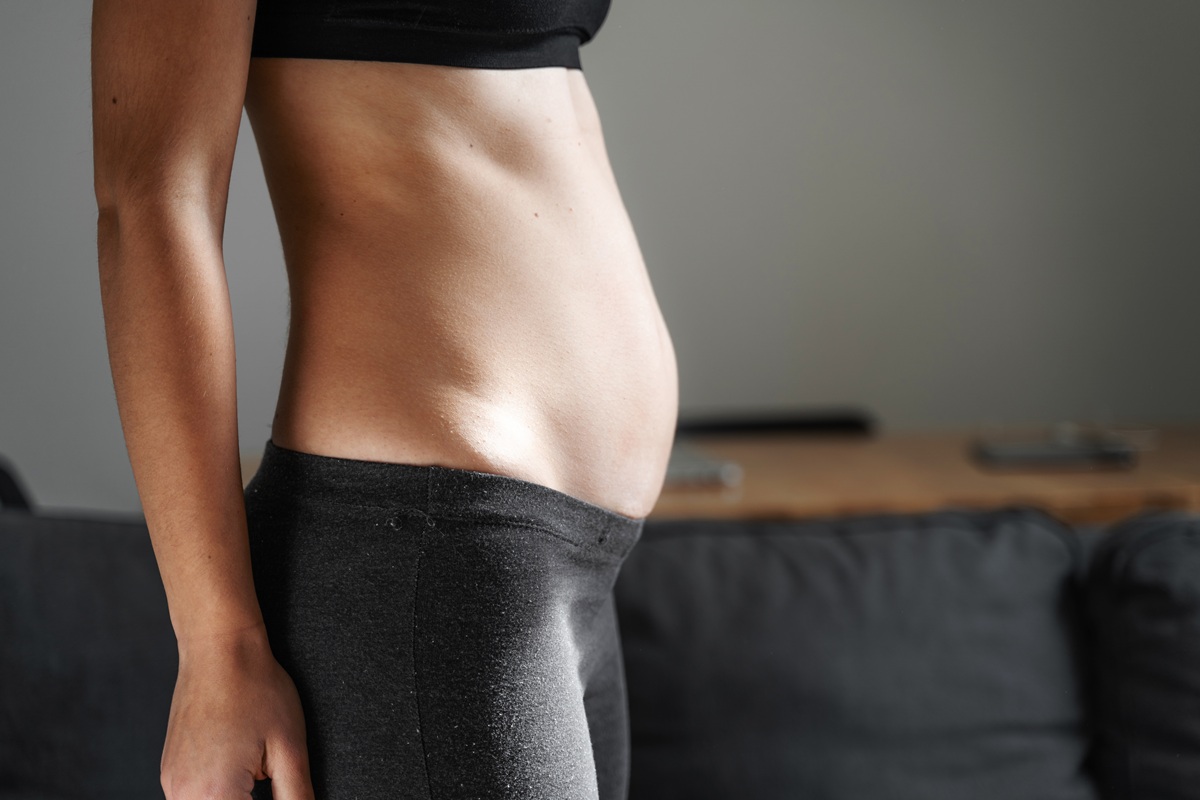
Skin laxity means the skin has lost firmness. It feels soft, thin, crepey, or a little deflated. It may wrinkle when you sit or bend, but when you stand up straight it mostly lies flat against your body.
Excess skin means there is more skin than the area now needs. When you stand, it folds or hangs, often over the waistband or a C-section scar. You can grab it and lift it.
Here’s a simple check. Stand in front of a mirror in good light. If the skin on your lower belly sits flat but looks crinkled or loose when you lean forward, you’re mostly dealing with laxity. If a fold of skin hangs down while you’re standing upright, you’re dealing with excess.
Non-surgical treatments can make a real difference for laxity. They cannot remove excess skin. Only a tummy tuck does that. A lot of women have some of both, and that’s where an in-person evaluation helps.
Non-surgical tightening treatments that work
Every treatment below works on the same basic principle. Controlled heat or energy reaches the deeper layers of the skin, the body treats it as a small injury, and it responds by building new collagen and elastin. That new collagen is what tightens the skin. Because the body does the rebuilding, results come in gradually over a few months, not overnight.
Morpheus8
Morpheus8 is our most effective option for loose skin on the stomach. It combines microneedling with radiofrequency energy, delivering heat through fine needles to a precise depth beneath the surface. That lets us reach the layer where collagen is made without damaging the surface more than necessary.
The body version of Morpheus8 can go deeper than facial treatments, which is useful for abdominal skin that has been stretched significantly. It also improves texture and stretch marks at the same time, which is one reason it suits postpartum skin so well.
Most patients need about three sessions, spaced four to six weeks apart. Expect some redness, swelling, and a sandpaper feel for a few days afterward. Tightening keeps developing for three to six months after the last session as collagen matures.
Forma
Forma uses radiofrequency heat applied from the surface, with no needles. It heats the skin gently and evenly, which stimulates collagen with no downtime at all. You can have a session and go straight back to your day.
The tradeoff is intensity. Forma is a good fit for mild laxity or as maintenance after Morpheus8. It usually takes a series of weekly sessions, and the results are more subtle. For moms who can’t take any downtime right now, it’s a comfortable place to start.
Emsculpt NEO
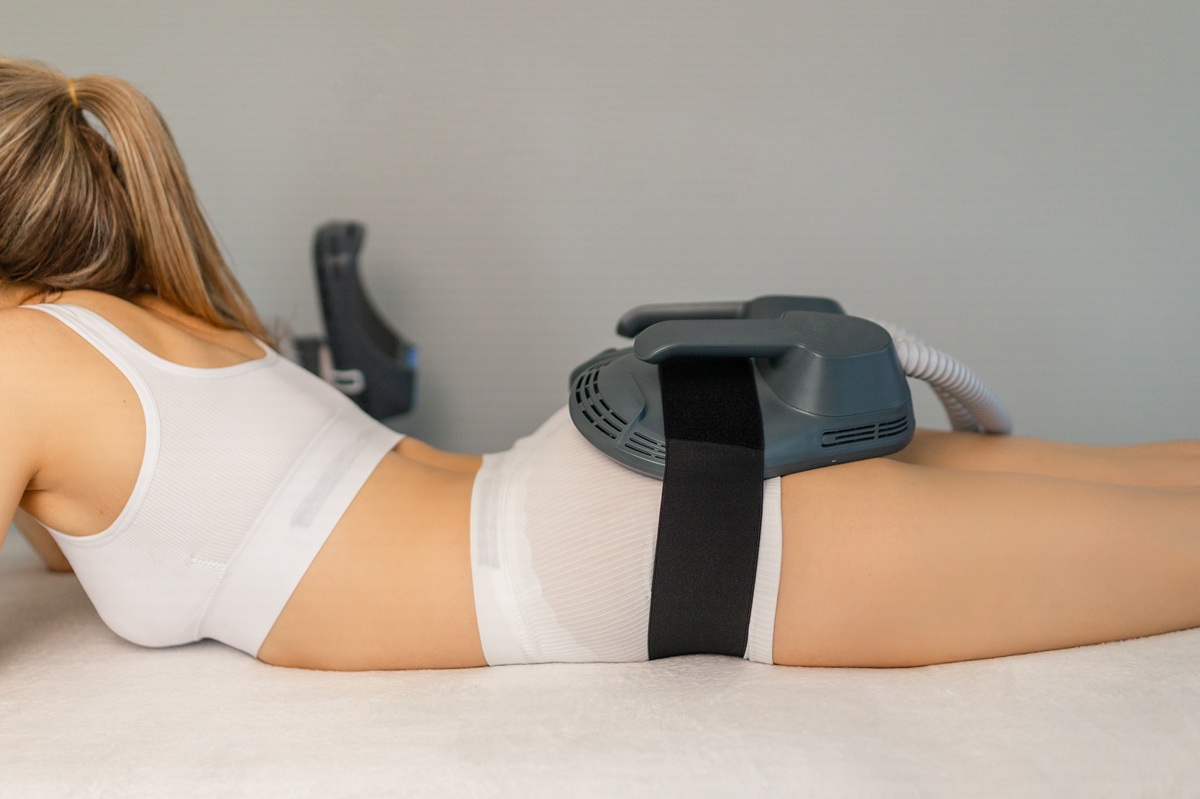
Emsculpt NEO doesn’t tighten skin directly. It builds the muscle underneath and reduces fat, and both of those change how the skin on top looks.
When the abdominal wall is weak or the muscles have separated, the stomach pushes outward and the skin over it looks looser than it is. Strengthening that muscle wall can flatten the area and make mild laxity far less noticeable. Emsculpt NEO also uses radiofrequency heat to reduce fat, which can help when a layer of stubborn fat is part of the problem.
For a lot of patients, the best results come from pairing Emsculpt NEO for the core with Morpheus8 for the skin. We covered the muscle side, including diastasis recti, in more depth in our article on whether EmSculpt can fix diastasis recti.
Carboxytherapy
Carboxytherapy places small amounts of carbon dioxide gas just under the skin. The body responds by increasing blood flow and oxygen to the area, which supports collagen production. It’s a supporting treatment rather than a main one. We sometimes add it to improve skin quality and stretch marks alongside Morpheus8.
What about creams and home remedies?
There’s a whole aisle of firming creams and oils marketed to new moms. Moisturizers can make skin feel softer and look smoother for a few hours, and that’s worth something. But no cream reaches deep enough to rebuild collagen in a meaningful way, and none of them will tighten loose skin.
What does help at home:
- Strength training. Building muscle, especially in the core, gives the skin something firmer to sit on.
- Gradual weight loss. Losing weight slowly gives skin more time to adjust than crash dieting does.
- Protein and hydration. Your body needs protein to make collagen. Water won’t tighten skin, but dehydration makes laxity look worse.
- Sunscreen. If any of the loose skin gets sun, protect it. UV exposure breaks down the collagen you’re trying to build.
- Not smoking. This one matters more than any product you can buy.
These habits won’t replace treatment for real laxity, but they help whatever treatment you choose work better and last longer.
When surgery is the right answer
We’d rather tell you this at the start than after you’ve spent money on sessions that can’t deliver.
A tummy tuck is the better option if you have a fold of skin that hangs when you stand, a severe separation of the abdominal muscles, a hernia, or loose skin combined with significant weight still to lose. In those situations, non-surgical treatment may improve skin quality a little, but it won’t give you the result you’re picturing.
If you plan to have more children, most surgeons recommend waiting on a tummy tuck until you’re done, since another pregnancy can stretch the repair. Non-surgical treatment can be a good bridge in the meantime.
When to start treatment
Most providers want you cleared by your OB before any body treatment, usually around six weeks after a vaginal delivery and later after a C-section. Beyond that, the best timing depends on your goals.
Because skin keeps improving naturally for up to a year, many women wait until they’re six months to a year postpartum to see how much tightening they need. Ideally your weight is fairly stable by then, too. If you’re breastfeeding, talk with your provider about which treatments are appropriate for you right now.
What a treatment plan looks like at Virtual Skin Spa
At our Jericho office, every plan starts with a consultation where we look at your skin standing and seated, check for muscle separation, and talk about how far postpartum you are and whether more children are in your future.
For mild laxity, that might mean a short series of Forma. For moderate laxity, Morpheus8 is usually the core of the plan, often paired with Emsculpt NEO if the abdominal wall needs support. If what we see is excess skin, we’ll tell you plainly and point you toward a surgical consultation.
Loose skin is often one piece of a bigger picture after pregnancy. If you’re also thinking about your core, stretch marks, or how your skin and hair have changed, our guide to a non-surgical mommy makeover walks through how those treatments fit together.
Frequently asked questions
Does loose skin after pregnancy ever go away on its own? It often improves a lot. Skin keeps remodeling for about a year after delivery, with most of the change in the first six months. Whatever looseness remains after that tends to stay without treatment.
What is the best non-surgical treatment for loose belly skin after pregnancy? For moderate laxity, Morpheus8 is usually the most effective option because it delivers radiofrequency energy deep enough to rebuild collagen. Milder laxity may respond to Forma. Many patients get the best results pairing Morpheus8 with Emsculpt NEO to strengthen the muscle underneath.
How do I know if I need a tummy tuck instead? If a fold of skin hangs down when you’re standing upright, that’s excess skin, and only surgery removes it. If your skin lies mostly flat but looks crepey or loose when you bend, non-surgical tightening can help.
How many Morpheus8 sessions will I need for my stomach? Most patients need about three sessions spaced four to six weeks apart. Results continue to improve for three to six months after the final session.
Is there downtime with skin tightening treatments? Forma has none. Morpheus8 usually means a few days of redness, swelling, and rough texture. Emsculpt NEO has no downtime, though your muscles may feel sore like after a hard workout.
Can I get skin tightening while breastfeeding? It depends on the treatment. Your provider will go over what’s appropriate for you while you’re nursing and what’s better saved for later.
Do firming creams tighten loose skin? No. Moisturizers can make skin feel smoother for a short time, but creams can’t reach deep enough to rebuild collagen or tighten loose skin.



Leave a Reply
You must be logged in to post a comment.