

Does Botox Hurt?
Here’s What the Injections Actually Feel Like
The honest answer—not the one designed to talk you into booking.
This is one of those questions that’s hard to get a straight answer on because nobody giving you information has a neutral interest in your response. Providers want you to book. People who’ve had it want to seem unfazed. The result is a lot of “it’s totally fine, barely felt a thing” from people who may have a higher pain threshold than you, or who’ve had it enough times that they’ve genuinely forgotten what the first one was like. So here’s the version that doesn’t have an agenda.
The Needle Is Smaller Than You’re Picturing
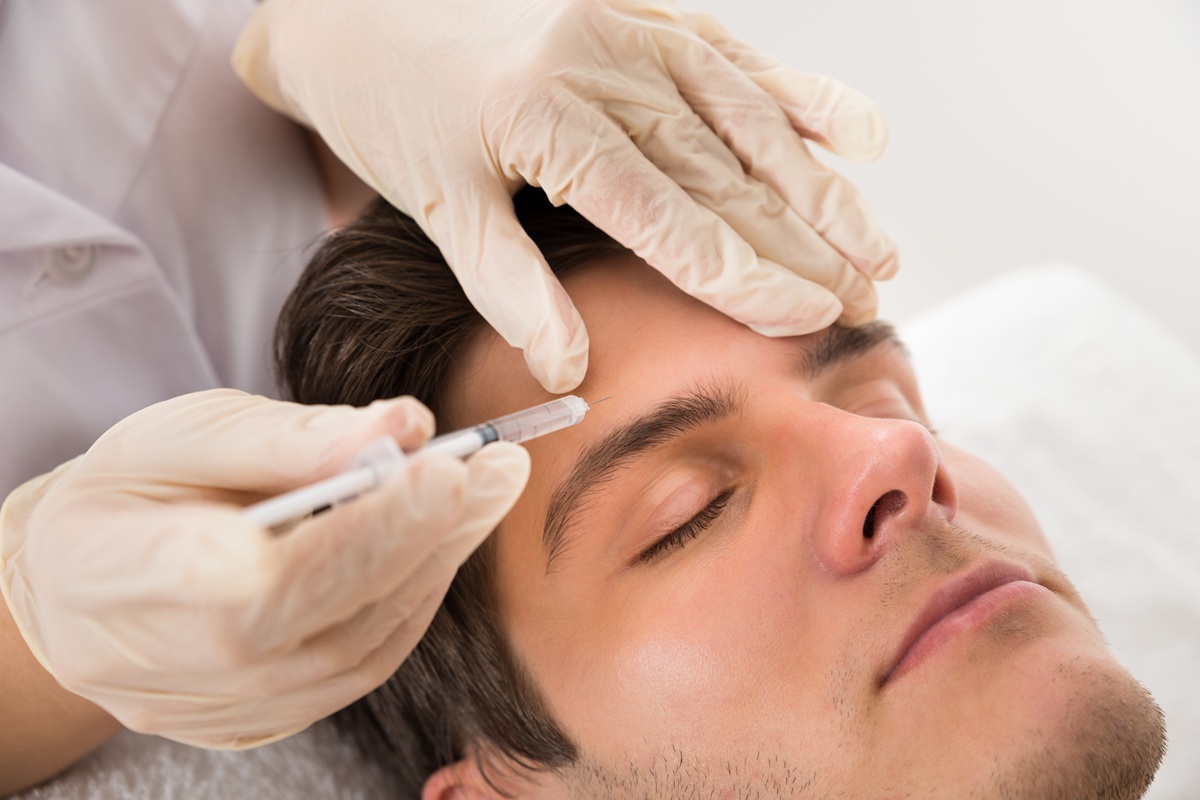
The gauge used for Botox injections is significantly finer than what you’d encounter at a blood draw or a standard vaccine. We’re talking about a needle designed specifically for superficial tissue—thin enough that most people, when they see it for the first time, immediately revise their expectation downward.
That matters because a lot of the anxiety around injectable treatments is tied to a mental image of something much larger than what actually shows up. The physical sensation follows from the actual tool, not the imagined one.
What It Actually Feels Like
A pinch. A quick, sharp pinch—and then it’s over. That’s the most accurate description most patients land on, and it holds up across a pretty wide range of pain tolerances. The injection itself takes a fraction of a second per site. There’s no sustained pressure, no lingering sting in most cases, no sensation of the product going in the way there can be with thicker injectables like filler.
Some people feel almost nothing. Some wince. Neither reaction is unusual, and neither one tells you much about how the result will turn out.
What tends to be more uncomfortable than the injections themselves is the anticipation between them. If you’re treating multiple areas—forehead, 11s, crow’s feet—there are several injection points involved. The gap between each one, where you’re braced for the next, can feel longer than the actual pinch.

Some Areas Are More Sensitive Than Others
Not all parts of the face respond to injections the same way. A few honest notes:
The forehead is generally the least eventful. The skin there is less dense with nerve endings close to the surface, and most patients report the forehead as the most comfortable area by a significant margin.
The area between the brows—the 11s—sits slightly closer to the bone, which can make some injections feel a little more pronounced. Still brief. Still manageable. But worth knowing if you’re going in expecting it to feel exactly like the forehead.
Crow’s feet are the area people most often describe as more noticeable. The skin around the eyes is thinner and more sensitive, and there are more nerve endings in that general vicinity. It’s not dramatic—it’s still a pinch—but if you’re going to feel something more than expected anywhere, it’s probably here.
The lip area, if that’s being treated, tends to be the most sensitive of the common treatment zones. The lips have a high concentration of nerve endings and the skin is thin. Providers often use topical numbing or ice here specifically because of this.
What Helps
Topical numbing cream. Not every provider offers it routinely, but most will use it if you ask. It takes about twenty minutes to take effect and meaningfully reduces what you feel at the injection site. If you’re particularly anxious about pain, ask about this before your appointment—it’s a simple request and a reasonable one.
Ice. Some providers apply ice to the area immediately before injecting. Cold numbs the surface enough to take the edge off, and it also helps with bruising. Again—ask if it’s not offered automatically.
Timing your appointment. Avoid booking right before your period if you can help it. Sensitivity tends to run higher in the days leading up to menstruation, and a lot of patients notice they feel injections more acutely during that window. It doesn’t make Botox unsafe—just potentially more uncomfortable.
Skipping stimulants beforehand. Caffeine increases nerve sensitivity. Not dramatically, but enough that some patients notice a difference between an appointment where they had two cups of coffee that morning versus one where they hadn’t. Not a rule, just a pattern worth being aware of.
Breathing. Sounds obvious. But the instinct to hold your breath and tense up when you know an injection is coming actually makes it worse. A slow exhale as the needle goes in genuinely helps—your muscles are slightly more relaxed, the skin responds differently. Providers will often cue you on this.
What About Bruising and Swelling Afterward?
Bruising is possible and fairly common—it doesn’t mean anything went wrong, it just means a small capillary was nicked during injection. It happens even with excellent injectors and optimal technique. The forehead bruises less than the areas around the eyes. Crow’s feet treatment is where you’re most likely to see a small bruise appear in the day or two after.
If you bruise easily in general, that’s useful information to share with your provider ahead of time. Arnica—topically or in supplement form—can help speed resolution. Avoiding blood thinners like ibuprofen, aspirin, fish oil, and alcohol for a few days before your appointment reduces the likelihood significantly.
Swelling is minimal with Botox compared to filler—the product itself is a liquid injected in very small amounts, and there’s no volumizing effect that would cause tissue to swell. You might see a tiny raised dot at each injection site immediately after, and that usually resolves within twenty minutes to an hour.
First Appointment vs. Every Appointment After
Something worth knowing: the first time is almost always the most anxiety-inducing, and rarely the most painful. Once you know what the sensation actually is—that quick pinch, the brevity of it—the anticipation shrinks considerably. Most patients who describe their first appointment as mildly uncomfortable describe subsequent ones as barely registering.
Part of that is familiarity. Part of it is that you stop bracing as hard. A meaningful part of pain perception is the unknown, and once the unknown is gone, the experience is just the experience.
The Provider Variable
How much discomfort you feel is also, honestly, tied to who’s injecting you. An experienced injector works quickly and confidently—fewer hesitations, smoother technique, less time spent at each site. That matters. A provider who’s slower, less certain about placement, or who needs to reposition frequently extends the amount of time you’re sitting there anticipating or experiencing something uncomfortable.
Theresa Pinson has been doing this for decades at Virtual Skin Spa in Jericho. Patients who were nervous coming in for the first time tend to describe the experience afterward as much easier than expected. That’s not a coincidence—it’s what years of technique and patient management actually looks like in practice.
If you’ve been putting off booking because you’re worried about pain, it’s worth having the conversation in person. A consultation isn’t a commitment to anything. Reach out here and ask whatever you need to ask before deciding.
Virtual Skin Spa — 500 North Broadway, Suite 142A, Jericho, NY 11753. Call (917) 331-6191 or visit virtualskinspa.com.




Leave a Reply