
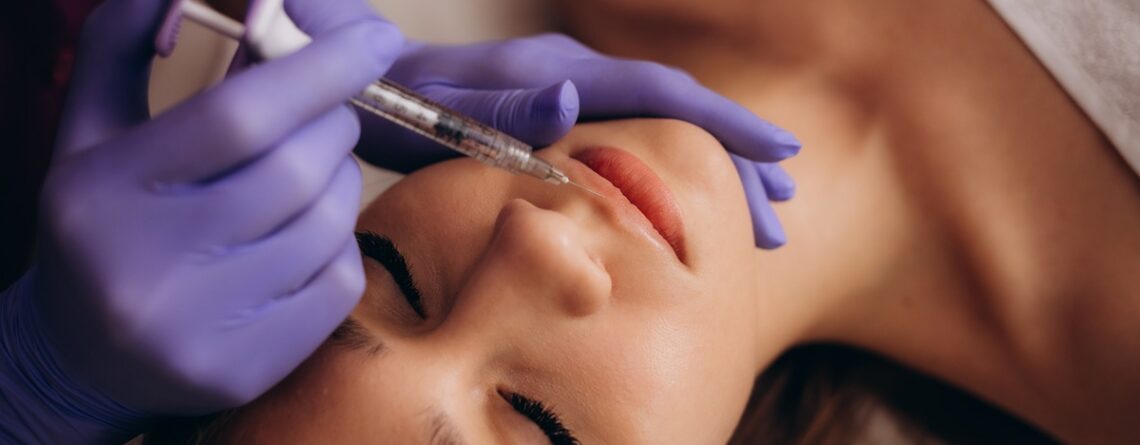
Botox vs. Fillers: Which One Do You Actually Need?
If you’ve been researching aesthetic treatments for any length of time, you’ve probably run into some version of this question—Botox or Fillers? And probably walked away more confused than when you started. The terms get used interchangeably in casual conversation, providers sometimes mention them in the same breath, and a lot of content online treats them as two flavors of the same thing.
They’re not. They work differently, they address different concerns, and choosing the wrong one for what you’re actually dealing with won’t get you the result you’re after. Here’s how to actually tell them apart.
The Core Difference Between Botox and Fillers
Botox is a muscle relaxer. It works by temporarily interrupting the nerve signal that tells a specific facial muscle to contract. No contraction means the skin above that muscle stops folding along the same groove repeatedly, and the lines that repeated movement creates over time stop deepening. In some cases, with consistent treatment, they soften.
Fillers are volume. They’re gel-like substances—most commonly hyaluronic acid—that get injected beneath the skin to restore structure, add fullness, or fill in a specific depression. They don’t interact with muscles at all. They sit in the tissue and physically occupy space.
One relaxes. One fills. Those are genuinely different mechanisms, and they’re designed for genuinely different problems.

What Botox Is Actually For
Dynamic lines. That’s the clinical term, and it’s the useful one. Dynamic lines are the ones created by movement—the creases that appear when you raise your eyebrows, frown, squint, or smile. When your face is completely relaxed, they may not be visible at all—or they’re faint, more like suggestions than grooves.
The forehead lines that show up when you look surprised. The 11s between your brows when you concentrate. The crow’s feet that appear when you smile. These are all dynamic. Botox addresses them directly because it targets the muscle creating the movement that’s creating the line.
What Botox won’t fix: lines that are fully etched in at rest. If you look in the mirror with a completely neutral expression and the line is still clearly there—deep, established—Botox alone may soften it slightly over time with consistent treatment, but it’s not going to erase it. That’s a different problem.
What Fillers Are Actually For
Volume loss and static lines. Static lines are present at rest—they’re not caused by muscle movement, they’re caused by the skin losing the support structure beneath it. As collagen breaks down and facial fat redistributes with age, certain areas hollow out. The nasolabial folds that run from the nose to the corners of the mouth deepen. The area under the eyes becomes more sunken. The cheeks lose the fullness that used to hold everything up.
Filler addresses this by putting something back where something used to be. It’s not about freezing a muscle—it’s about restoring architecture.
Fillers are also used for structural enhancement that has nothing to do with aging: lip augmentation, chin definition, jawline contouring. These are additive treatments, not corrective ones—adding shape where it was never there to begin with.
The Overlap Area—Where It Gets Complicated
Here’s where most people get confused, and understandably. Some lines sit in between these two categories. Deep 11s that are visible at rest, for example—they have a dynamic component (the muscle that created them) and a static component (the groove that’s now etched in even without movement). In cases like this, Botox addresses the muscle, but filler might be needed to actually fill in what’s already there.
The same is true for fine lines around the mouth. The lip lines—the vertical creases above the lip border—can have a muscle component, but they also often involve volume loss and skin texture changes that Botox alone won’t touch.
This is the situation where “which one do I need” becomes “probably some version of both, but in the right proportions and the right order.” It’s also the situation where the experience of your injector matters enormously. Someone who understands facial anatomy, who can look at a line and tell you what’s driving it, is going to give you a much more honest and useful answer than someone who defaults to one product for everything.

How to Tell What You’re Actually Dealing With
There’s a simple test that’s not perfect but gives you useful information. Look in the mirror with a completely neutral, relaxed expression. Note what you see. Then make the expression that you feel is aging you—raise your eyebrows, frown, squint—and note what changes.
If the lines you’re concerned about appear or dramatically worsen with movement and are minimal at rest, that’s predominantly a dynamic issue. Botox is probably your starting point.
If the lines or hollows are clearly there at rest and movement doesn’t change them much, that’s predominantly a static or volume issue. Filler is probably more relevant.
If it’s somewhere in between—present at rest but worse with movement—that’s the combined territory, and a conversation with a provider who’ll give you an honest assessment is the most useful next step.
A Note on Timing
If you’re new to injectables and considering both, there’s a general logic to the order. Botox first, in most cases. It’s temporary, it’s lower risk, and it lets you see what relaxing the dynamic component does to the overall picture before adding volume on top. Sometimes people who were convinced they needed filler find that addressing the muscle movement gets them most of the way there.
Filler on top of untreated dynamic lines can also produce results that look strange—filling in a crease that the muscle is actively recreating with every expression isn’t always the most efficient approach.
That said, this isn’t a rigid rule. Some providers treat both in the same appointment. The right sequence depends on what you’re treating and what your goals are.
Virtual Skin Spa Carries Both
At Virtual Skin Spa in Jericho, Theresa Pinson works with both neuromodulators and dermal fillers. The conversation about which one—or which combination—is right for you happens during your consultation, not before it. Because that answer genuinely depends on your face, not on a general recommendation made in advance.
If you’ve been trying to figure out which direction to go and the internet hasn’t been particularly helpful, that’s the conversation worth having in person. Book a consultation here and get an actual answer based on what you’re actually dealing with.
Virtual Skin Spa — 500 North Broadway, Suite 142A, Jericho, NY 11753. Call (917) 331-6191 or visit virtualskinspa.com.






Leave a Reply